Learn Coin Magic
The Magician's Oath
"You must promise never to reveal the secrets of any illusion unless one swears to maintain the Magician's Oath in turn."
This sacred oath binds all who practice the magical arts. By learning here, you accept this responsibility.
♦ Selecting Your Coins
Finding, choosing, aging, and caring for your coins
Selecting Your Coins
Finding, choosing, aging, and caring for your coins
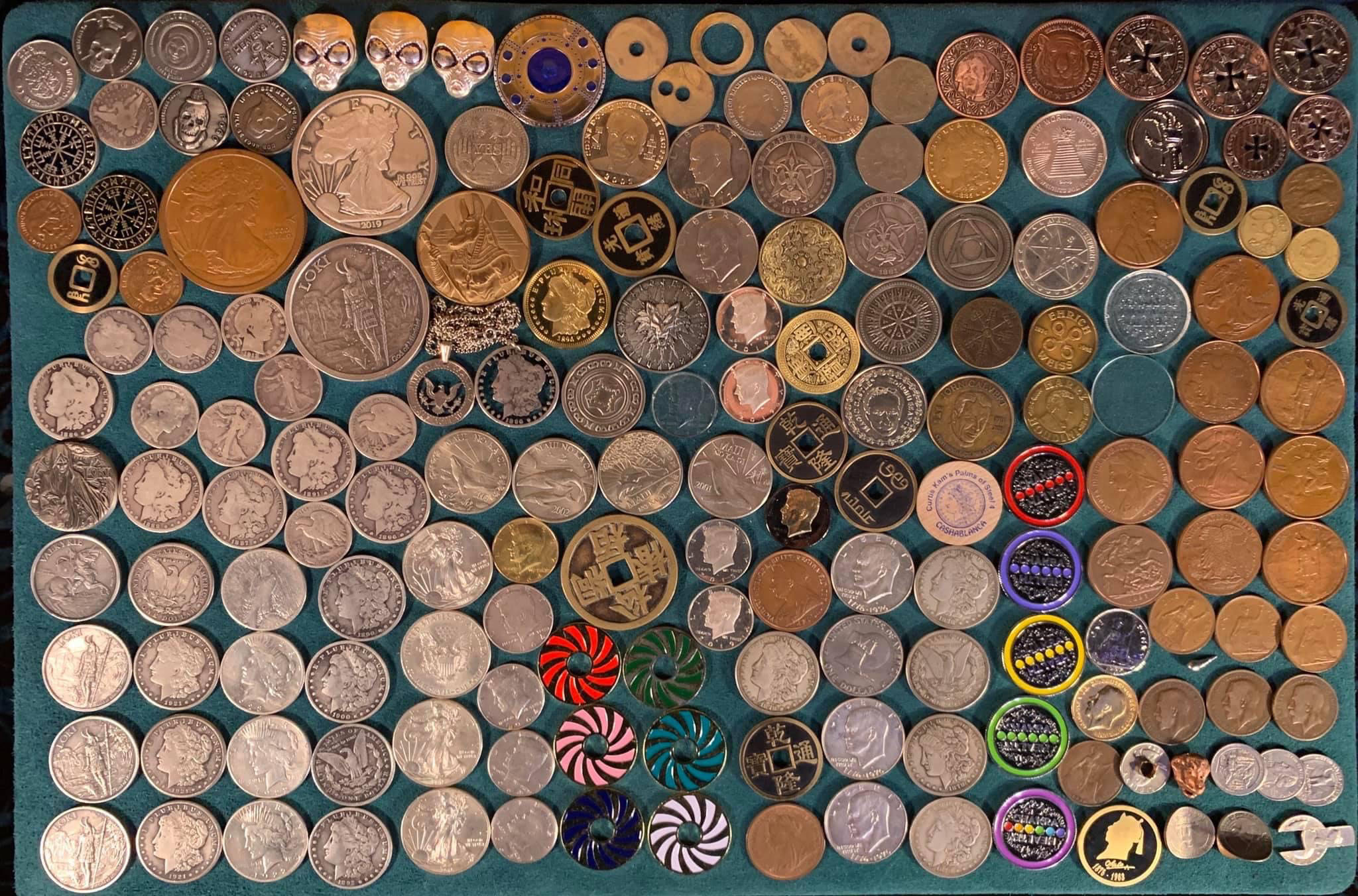
1 Size: Diameter and Edge Type
Two of the most important aspects of a coin to consider are its diameter and whether or not the edge of the coin is milled or reeded. Using coins with the optimal attributes will help aid in sleight-of-hand moves and increase the visuals or apparent impossibility of the magic.
About Size
In my opinion you should practice and perform using the largest coin that you can use comfortably without compromising your magic. The most common size coins used in coin magic are US Half Dollars which are 1.2" in diameter and US Silver Dollars which are 1.5" in diameter. In some rare cases a US Quarter Dollar can be used which is just under 1 inch in size but it may be hard to see. These three sizes are very easy to find even in non US currency so it's a good place to start.
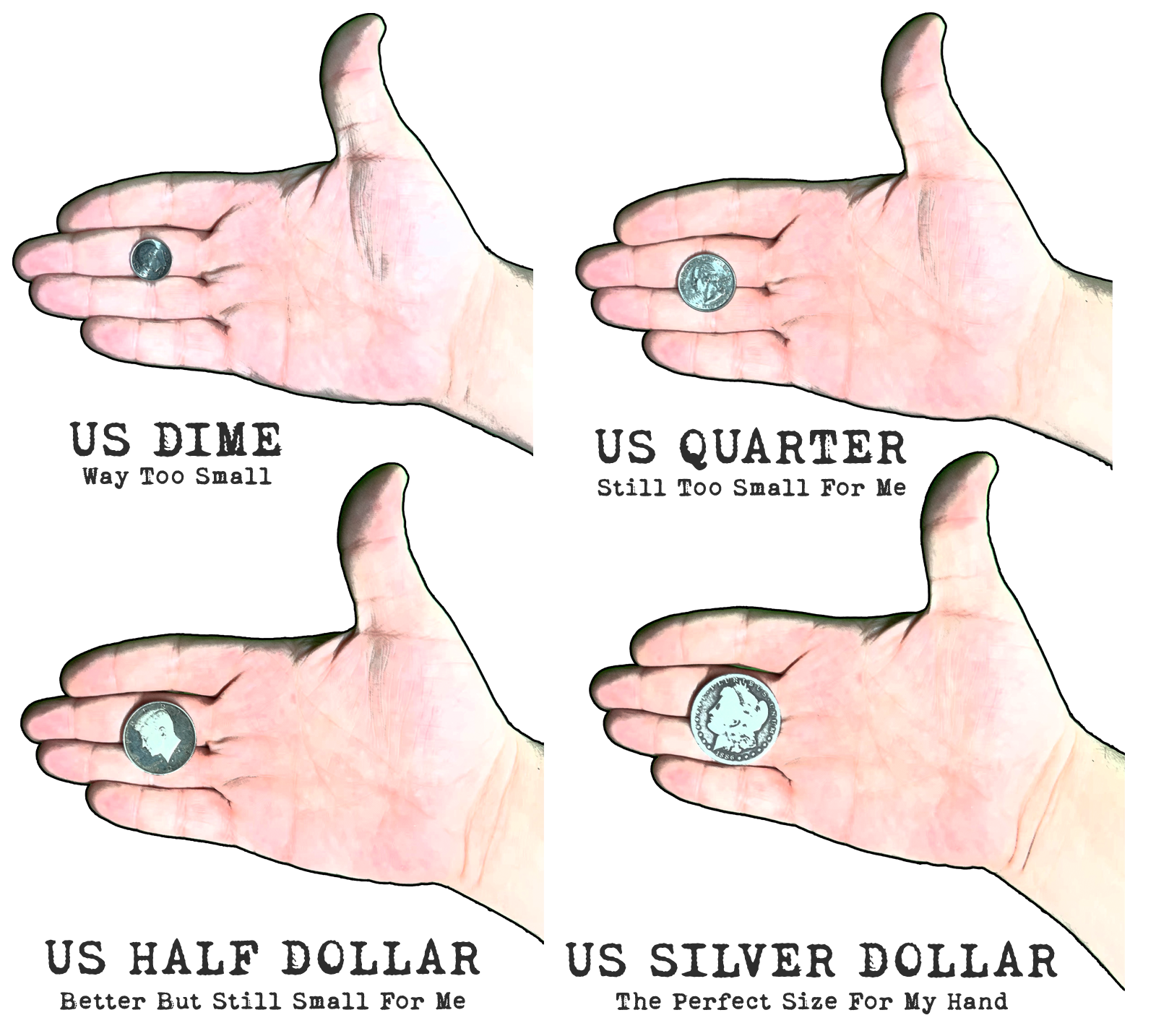
The reason you want to use the largest coin possible is to aid in the visibility of your magic. If you were to do magic with a very small coin like a US Dime it would be easy to imagine the coin could hide in the flesh of your hand. With the US Half Dollar or US Silver Dollar you can see the coin very clearly and when it disappears or reappears it is very hard to understand where this giant coin has gone, adding to the mystery.
About Edge
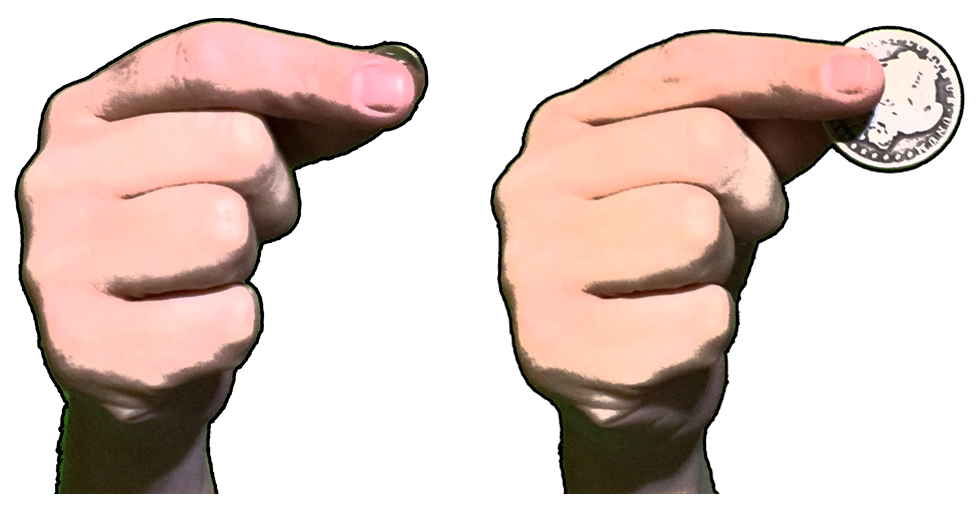
The outer edge of the coin can impact your ability to grip the coin. As your hands sweat a smooth edge may become slippery making some sleight-of-hand moves more difficult. A reeded or milled edge contains a series of grooves or cuts spaced evenly around the coin which helps create a better grip aiding in the execution of these moves.
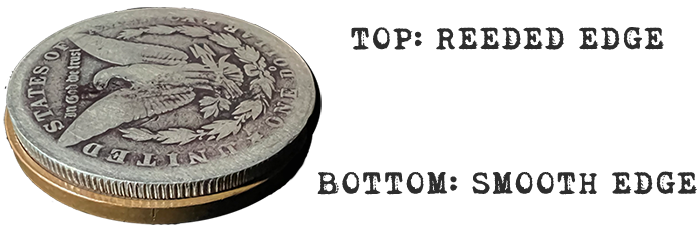
While a milled/reeded edge is not a necessity the advantage they offer should be taken into consideration when choosing a coin. Therefore the optimal coin will fit across the two middle fingers and contain a reeded edge for better grip.
2 Metal: Copper, Silver or Clad
Most coins you will run across are made of Copper, Brass, Silver, Clad and/or Ferrous metals. Each type has distinct characteristics affecting durability, appearance, patina development, sound, wear patterns, cost, and magnetic properties. Individual allergies to certain metals may also influence your purchasing decisions.
Clad and Ferrous Coins
Clad coins are made out of a mixture of multiple metals. Common examples include US Quarters, Nickels, Dimes, Kennedy Half Dollars, and Eisenhower Silver Dollars. Advantages include affordability, durability, and widespread availability. These coins maintain a new appearance despite extended use.
Ferrous coins are made of iron or clad metals including iron that attract magnets. Benefits include durability and the ability to conceal magnets for easy coin retrieval. They resist degradation over time.
Brass and Copper Coins
Both metals share similar characteristics: they polish to bright finishes and naturally darken with age. Copper pennies appear in colors ranging from bright gold to dark brown or greenish-blue patinas. While affordable, they risk damage from hard surface drops but maintain excellent condition with minimal wear. They can be polished or aged for enhanced aesthetics compared to clad alternatives.
Real Silver Coins
Premium coins contain 90% or more silver. They produce distinctive bright tones and sparkle with white-like luminescence. The metal softens and develops grey and silver tones over time, enhancing artwork. However, they require careful handling over soft surfaces to prevent damage. They represent the most expensive option with prices fluctuating with silver markets.
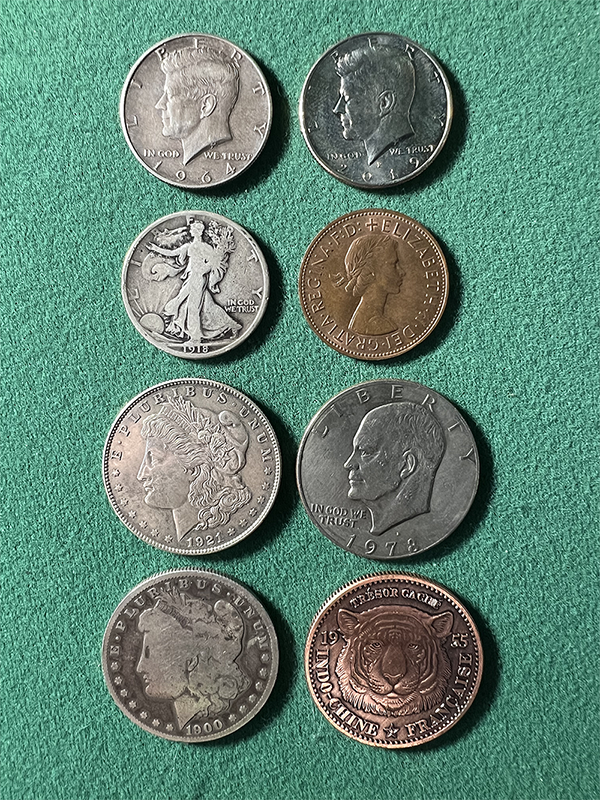
Left Column: 90% Silver — Right Column: Clad and Copper
3 Wear: Soft vs Uncirculated
When choosing a coin you should take into consideration whether it is in freshly minted uncirculated condition or has heavy wear otherwise known as being "soft". This will affect the ability to remain silent during some sleight-of-hand moves.
Uncirculated Coins
When coins are freshly minted they are considered uncirculated and the artwork is at its maximum height and definition. When coins are rubbed together these uneven surfaces scratch together and create noise or "talk". Some complex moves in coin magic require the coins to slide against one another and secret moves may be heard by the spectator exposing the magic. This problem is amplified in a quiet room but may not be an issue in a loud bar or restaurant. One benefit of uncirculated coins is the reeded/milled edge will be deep which aids in gripping the edge of the coin.
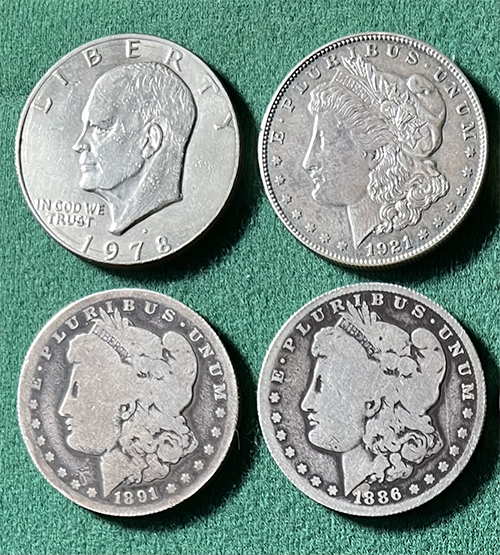
Top row: Uncirculated — Bottom row: Soft (worn)
Soft Coins
As coins travel from pocket to pocket the metal wears down and the coin becomes smooth. This is most common with real silver coins as it is not as hard as clad, brass, or steel materials. Having well worn "soft" coins will help you perform coin magic with the least amount of sound as friction is reduced. One negative aspect of soft coins is the edge will also become smooth removing the milled edge and becoming slippier when held by the edge. Newer coins can be smoothed out or softened by sanding the coins and edges can also be re-milled by a professional.
The soft coins pictured below had a perfectly smooth edge until they were re-milled by Roy Kueppers to have a deeply reeded edge.
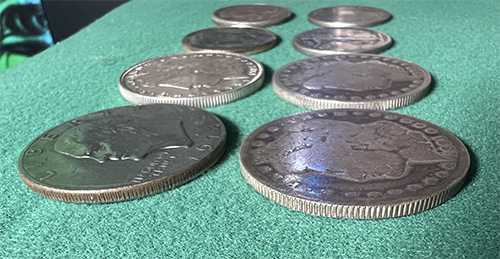
Left column: Uncirculated — Right column: Soft (worn)
Sound Comparison
See the video below for a comparison of the sound made by uncirculated coins versus soft coins. The more a coin is worn down the quieter it is.
Uncirculated Coins vs Soft Coins Sound Test
Softening Coins
See the detailed video below made by Brad Morgan explaining how to safely soften coins.
Making Coins Soft from Brad Morgan on Vimeo
4 Patina: Aging Coins
Most magicians prefer their silver coins to have a dark patina with bright, contrasting artwork on the raised surfaces. This gives the coins a look of history and age, as if they've been carried and handled for decades. The good news is you can achieve this look yourself with a simple process using household bleach and a pink eraser.
This process only works with real silver coins (90%+ silver content such as Morgan Dollars, Peace Dollars, or Walking Liberty Half Dollars). It will not work on clad or coated coins.
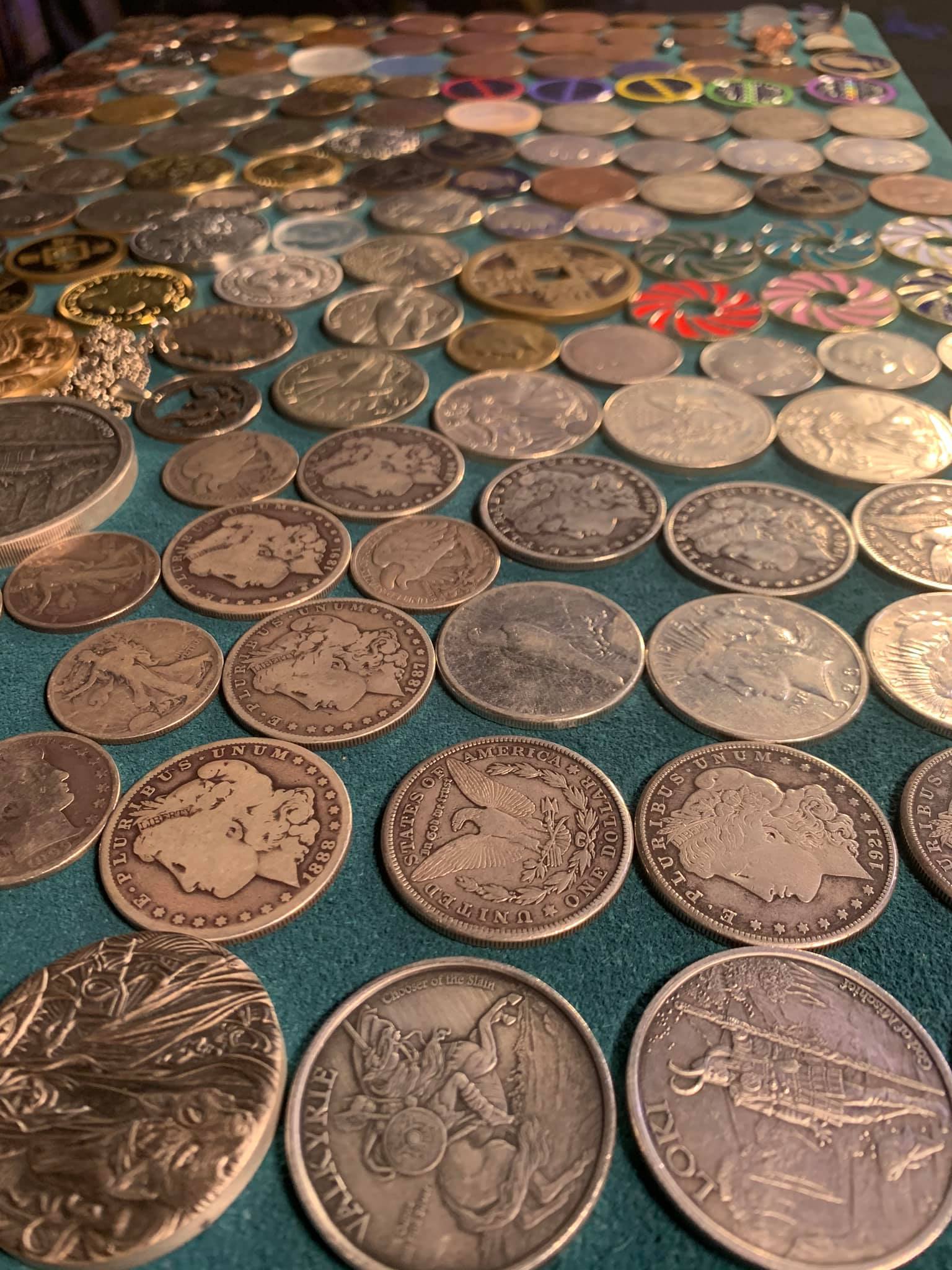
Various coins with different levels of natural and applied patina
Why Patina?
As coins are naturally handled, placed in pockets, or stored in purses over the years, the raised surfaces get rubbed clean from contact while the recessed areas remain dark since they have very little contact with fabric or skin. This creates a beautiful contrast between bright raised artwork and dark recessed areas. We can accelerate this natural aging process to achieve the same look in minutes.
Each coin will darken differently depending on its composition and condition, but by running all of your coins through this process you can make a set of mismatched coins look much more uniform and cohesive.
What You'll Need
- Real silver coins (not clad or coated)
- Dish soap and water
- Household bleach (such as Clorox)
- A jar lid or small shallow container
- A pink pencil eraser (such as Paper Mate Pink Pearl)
Step 1: Clean the Coins
Wash your coins thoroughly with soap and water to remove any grease, oil, or residue from your hands. The goal is to expose the bare metal surface. Do not use polish — polish will protect the metal and create a barrier. We want the silver fully exposed to the bleach so it reacts evenly.
Step 2: Apply Bleach
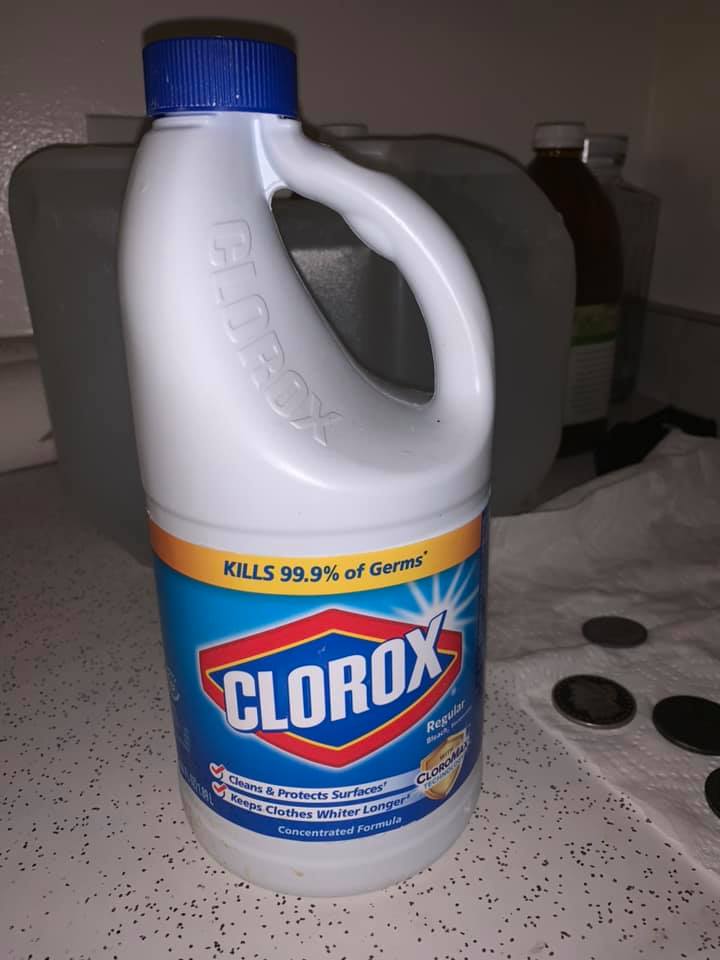
Standard household bleach is all you need
Use a jar lid or small shallow container to hold a small amount of bleach. Place your coin in the lid, pour a little bleach so the bottom of the coin is submerged, then add just enough bleach on top to pool up on the surface of the coin. Leave it for 10 to 20 minutes, or until the coin reaches the darkness level you want.
The coin will get progressively darker — from a light grey to a deep brown to nearly black if you leave it long enough. Check on it frequently and remove it when you're happy with the color. It's a good idea to go darker than your target, because the dark patina will naturally lighten as you handle and use the coins for magic. What starts as black will gradually become a more natural brown/grey with use.
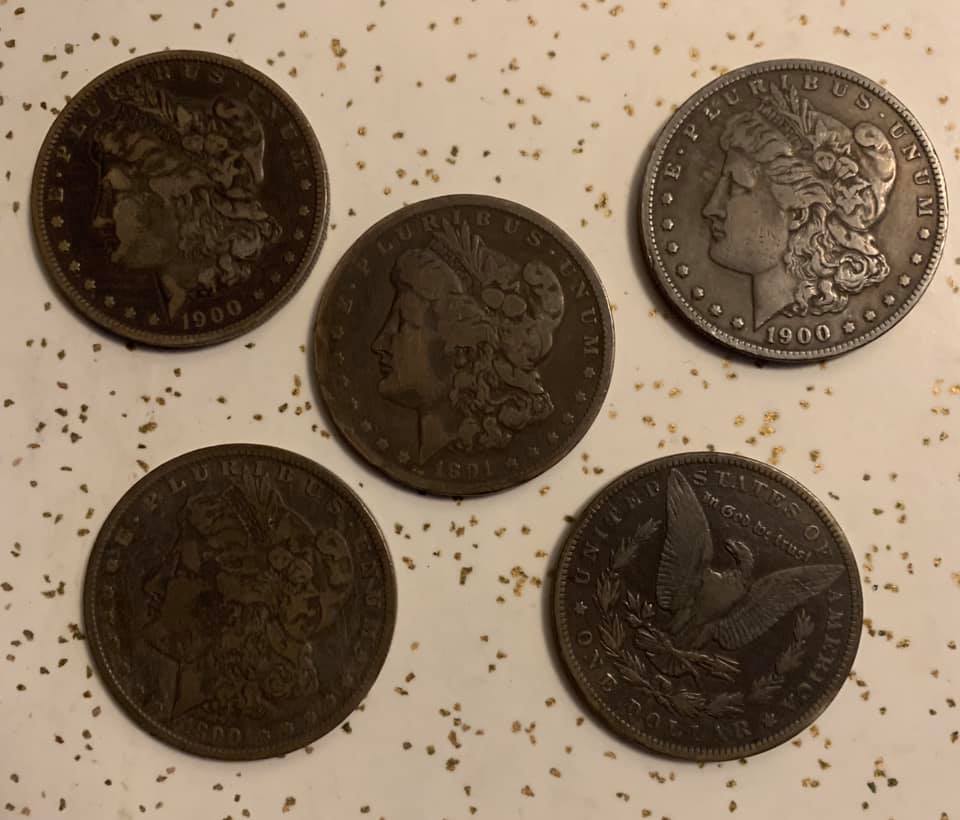
Coins after bleach treatment — notice the varying darkness levels
Step 3: Rinse
Remove the coin from the bleach and rinse it thoroughly under water. Allow it to dry completely before the next step.
Step 4: Erase the Surface
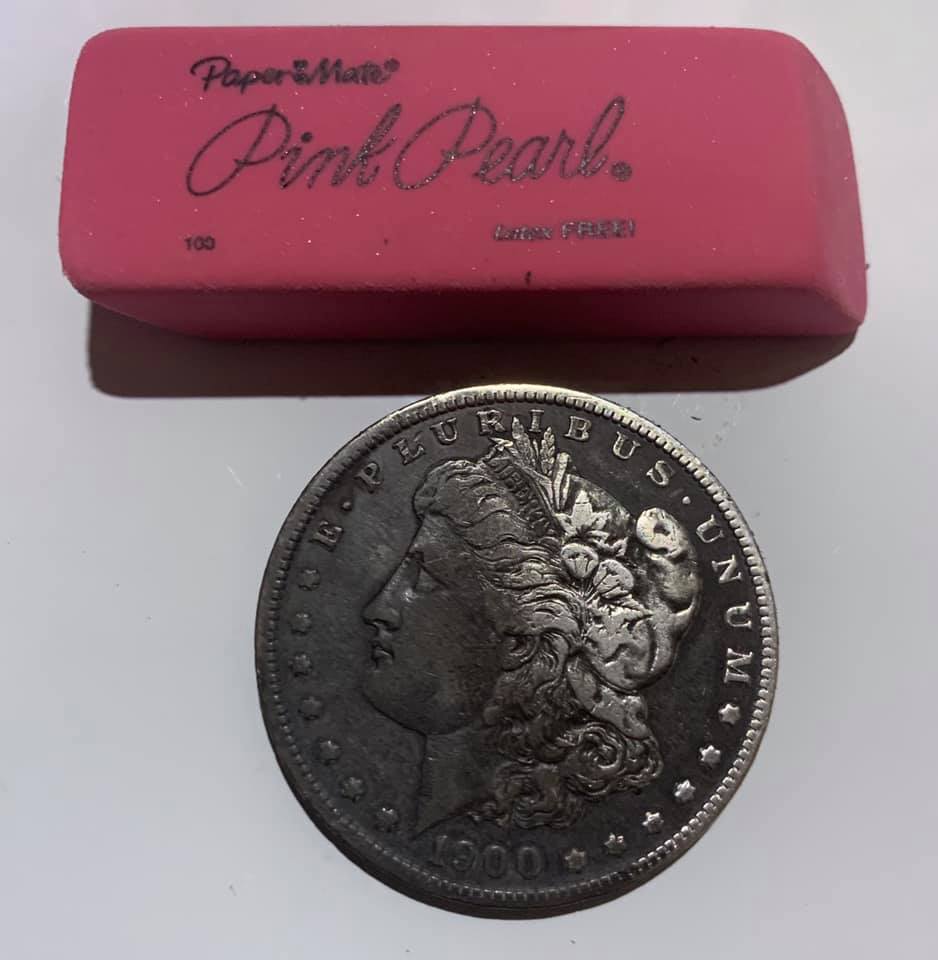
Before and after — the darkened coin next to one with erased highlights. A flat pink eraser selectively cleans only the raised artwork.
Once the coin is dry, use a pink pencil eraser (such as a Paper Mate Pink Pearl) to rub the flat surface of the coin. The flat end of the eraser works perfectly to selectively "erase" only the raised artwork and lettering, leaving the recessed areas dark. You can use the edges or corners of the eraser to clean specific areas that aren't raised if you want more control.
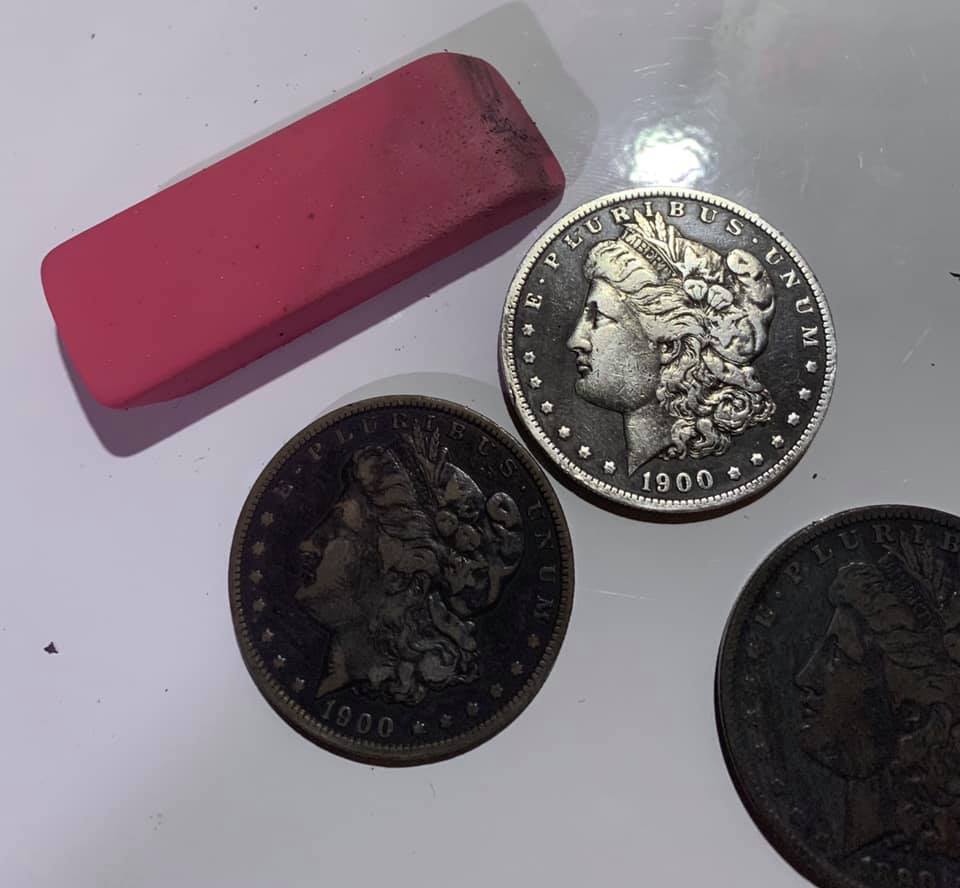
The finished result — bright silver raised artwork against a dark recessed background, achieved with a simple Pink Pearl eraser
When finished, the raised artwork of the coin will be bright silver while the recessed areas remain dark. This is exactly how coins look as they naturally age — the contact surfaces are rubbed clean while the low points stay tarnished.
The Results
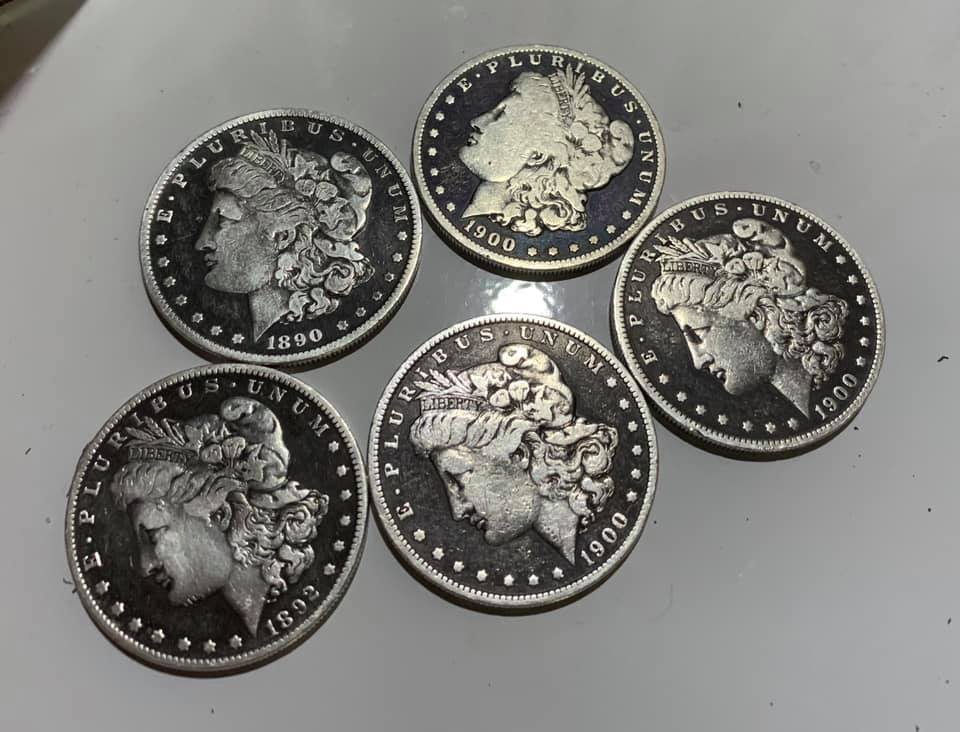
A matching set of Morgan Dollars — all darkened and erased to create a uniform, aged appearance
By running all of your coins through this same process, you can take coins with mismatched wear and patina and make them look like a cohesive, matching set. The darkened patina will continue to evolve naturally as you handle the coins in practice and performance.
Alternative Method: Ammonia
You can also use ammonia instead of bleach, but the process is different. With ammonia, it is the gas that darkens the coin, not the liquid. Place your coin inside a sealed container such as Tupperware, and set a small lid or bottle cap filled with ammonia inside the container next to the coin. Do not submerge or wet the coin with ammonia. Seal the container and the ammonia fumes trapped inside will darken the coin over time.
The ammonia method can produce blue and green color tones in addition to darkening, and it works especially well with copper coins — creating the verdigris green and blue patina you see on very old pennies.
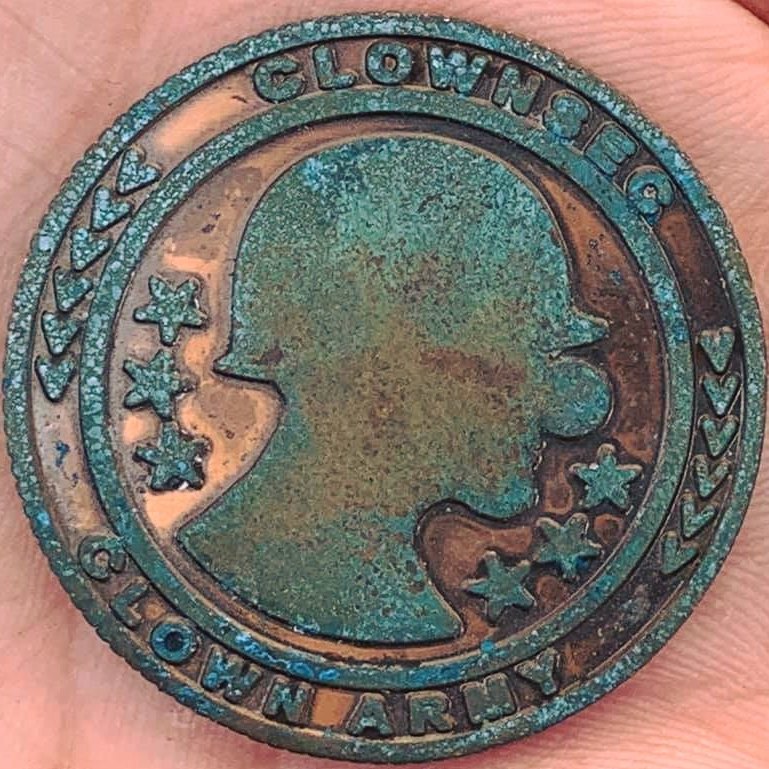
Copper coin with blue-green patina achieved through the ammonia gas method
Important Cautions
- Silver coins only — this bleach process does not work on clad or coated coins.
- Do not over-expose — both bleach and ammonia are deteriorating the metal surface. Check on your coins frequently and never leave them overnight. Too long will create a rough, pitted surface that is unpleasant to handle.
- Go darker than your target — the patina will naturally lighten with handling, so starting darker gives you a better long-term result.
- Work in a ventilated area — both bleach and ammonia produce fumes. Use in a well-ventilated space.
5 Cleaning: Polishing Coins
A silver polishing cloth is the most versatile cleaning tool for a coin magician. It can serve two very different goals depending on how you use it:
- Make coins bright silver — polish the entire coin aggressively to remove all tarnish and restore a brilliant, mirror-like shine. This is ideal if you want your coins to look brand new, flash in the light during performances, and stand out visually.
- Maintain patina selectively — gently polish only the raised surfaces while leaving the recessed areas dark. This preserves the aged look you created with the bleach method while keeping the highlights bright and contrasting.
Both looks are used by professional magicians — some prefer the classic aged appearance while others want their coins gleaming and eye-catching. The polishing cloth gives you full control.
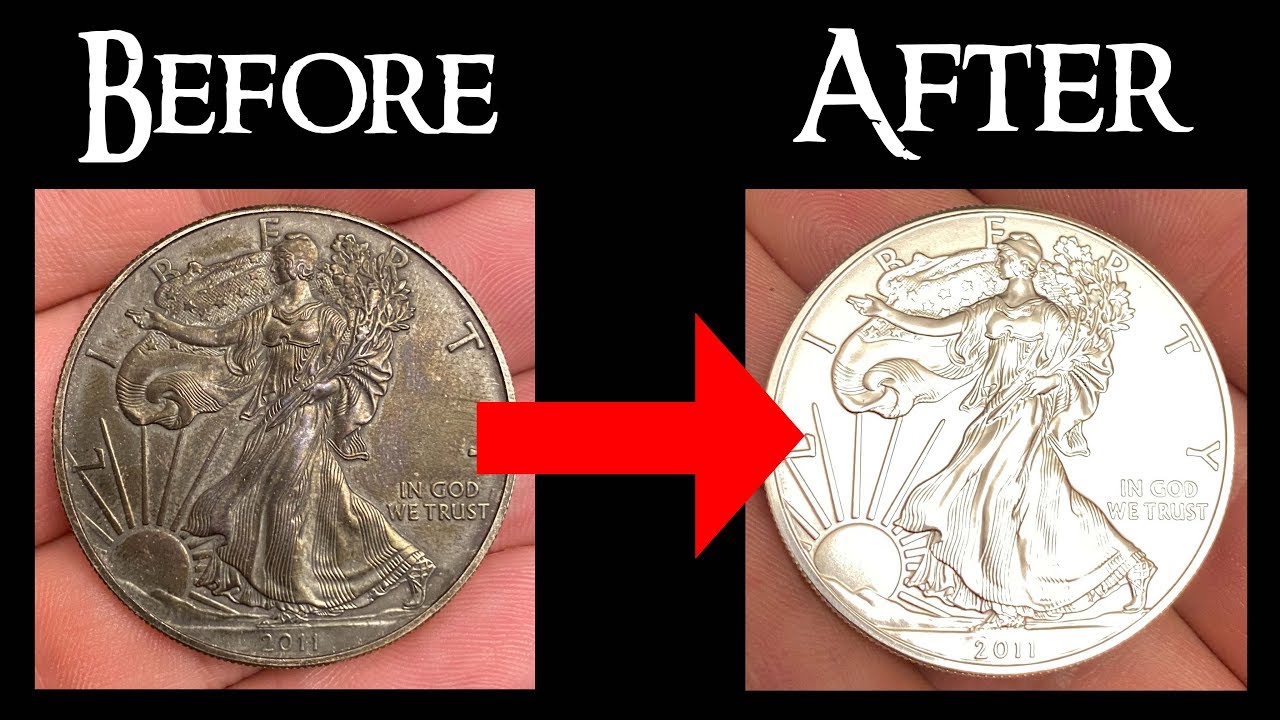
Before and after — a tarnished Walking Liberty restored to a bright shine using only a polishing cloth
What is a Silver Polishing Cloth?
A silver polishing cloth is a soft fabric infused with a gentle polishing compound designed specifically for precious metals. They typically come in a small sealed bag to keep the compound from drying out. Unlike liquid polishes or dips, the cloth gives you precise control over exactly which areas of the coin you clean — perfect for selectively brightening raised artwork while leaving recessed areas dark.
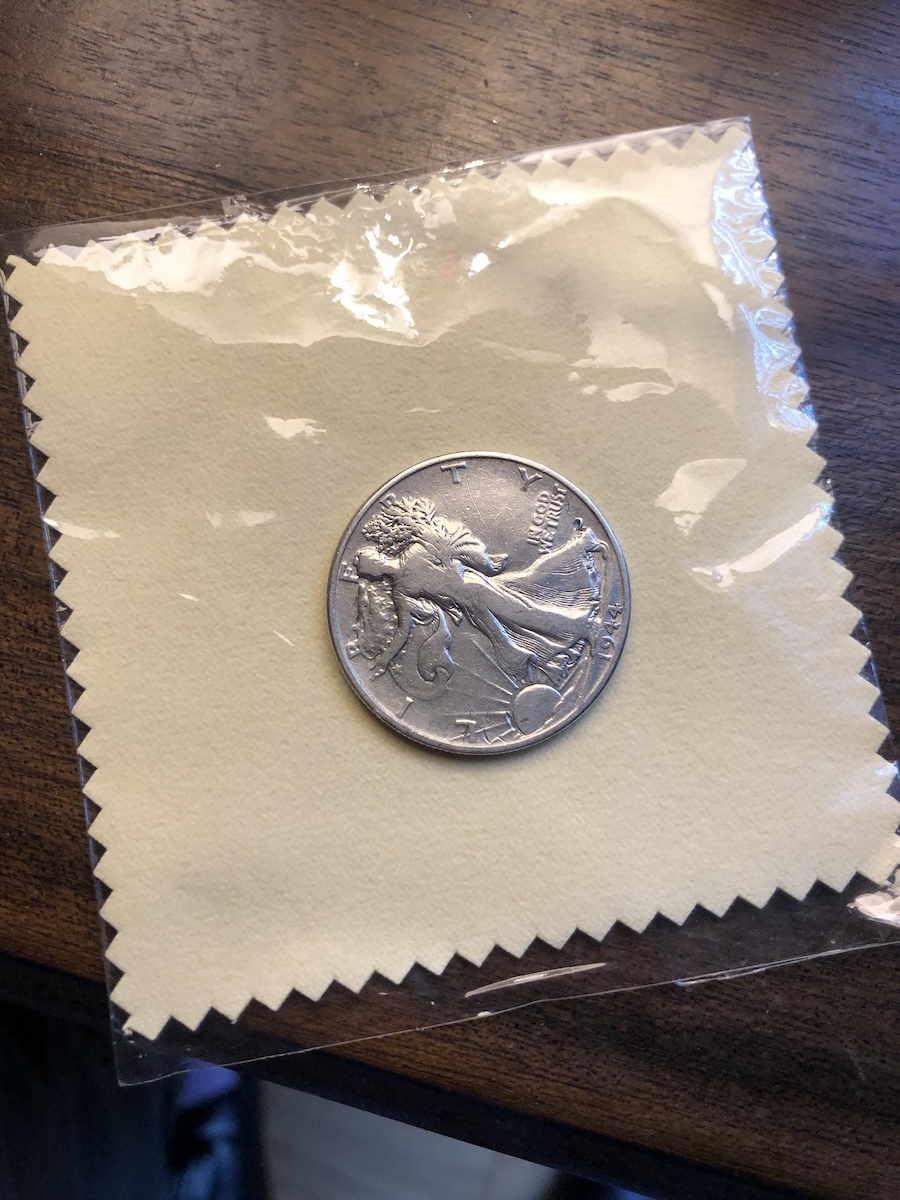
A Walking Liberty half dollar on a silver polishing cloth — the cloth does all the work
For Bright Silver Coins
- Place the coin on the cloth on a flat surface.
- Fold the cloth over the coin and rub firmly in circular motions, applying steady pressure.
- Polish both sides thoroughly — front, back, and edges. Don't be shy with the pressure.
- Continue until the tarnish is gone and the coin has a bright, even shine across the entire surface.
- For stubborn tarnish, repeat the process or use a fresh section of the cloth.
The before and after above shows what's possible — a heavily tarnished Walking Liberty transformed to a brilliant silver with nothing but a cloth and a few minutes of rubbing.
For Maintaining Patina
- Place the coin on a flat, soft surface.
- Fold the cloth over the coin and rub gently with light to moderate pressure.
- Focus only on the raised areas — the artwork, lettering, and rim. Avoid pressing into the recessed areas.
- Flip the coin and repeat on the other side.
- For edges, pinch the coin through the cloth and rotate it to polish the reeded edge.
This technique keeps the contrast you created with the bleach and eraser method — dark recesses, bright highlights — and freshens up the coin between performances.
Tips
- Don't overdo it — a few passes is usually enough. You're brightening, not stripping the metal.
- Preserve your patina — if you've applied a dark patina using the bleach method, the cloth will only clean the surfaces you rub. Avoid pressing into the recessed areas if you want to keep the contrast.
- Works on all silver coins — Morgan Dollars, Peace Dollars, Walking Liberties, Kennedy halves (pre-1970 silver), and silver rounds all respond well.
- Keep the cloth sealed — store it in its bag when not in use so the polishing compound doesn't dry out. A single cloth lasts a long time.
- The cloth will turn black — this is normal. It means it's working. The dark residue is oxidation being removed from the coin's surface.
A polishing cloth is an essential tool in any coin magician's kit. It's the quickest way to make your coins look their best before a performance, and it pairs perfectly with the patina process — darken with bleach, erase the highlights with a pink eraser, then maintain with a polishing cloth over time.
6 Buying: Purchasing Coins
When buying coins for magic there is no need to pay a premium for highly graded or mint coins since you will be handling your coins daily.
Silver and Antique Coins
Local coin shops offer the best pricing for real silver coins in the U.S. Look for "junk silver" (also called "slicks") — coins that have lost collector value due to wear or damage. These worn pieces suit magicians perfectly and cost slightly above their silver weight value. Morgan Dollars and Peace Dollars from the early 1900s are available, along with Barber and Walking Liberty half dollars for those preferring smaller denominations.
Price Tiers
Local coin shops are cheapest, eBay and online precious metal dealers charge more, while magic suppliers command the highest prices but provide carefully curated matching sets with optimal wear and patina.
Collectable / Challenge Coins
Hundreds of themed coins exist — from holiday designs to Aztec calendar imagery to sobriety celebration coins. One oz copper and silver rounds remain readily available. The limitation is that unconventional coins rarely have matching trick versions.
Gaff / Trick Coins
Gaff coins are coins which have been modified in a way to give them special abilities. Many magicians avoid them despite their dramatic potential. They're expensive and easily lost. Suppliers include Schoolcraft Precision, Roy Kuepper's World of Magic, Craig Ousterling's Okito Boxes, and Copeland Coins.
✪ Coin Flourishes
Displays of skill — coin rolls, juggling, muscle pass
Coin Flourishes
Displays of skill — coin rolls, juggling, muscle pass
☶ Coin Magic Fundamentals
Core techniques — palms, passes, and essential sleights
Coin Magic Fundamentals
Core techniques — palms, passes, and essential sleights
♠ Coin Magic Routines
Complete performance pieces — audience-ready magic
Coin Magic Routines
Complete performance pieces — audience-ready magic
★ Puzzles & Bar Tricks
Brain teasers and coin challenges
Puzzles & Bar Tricks
Brain teasers and coin challenges